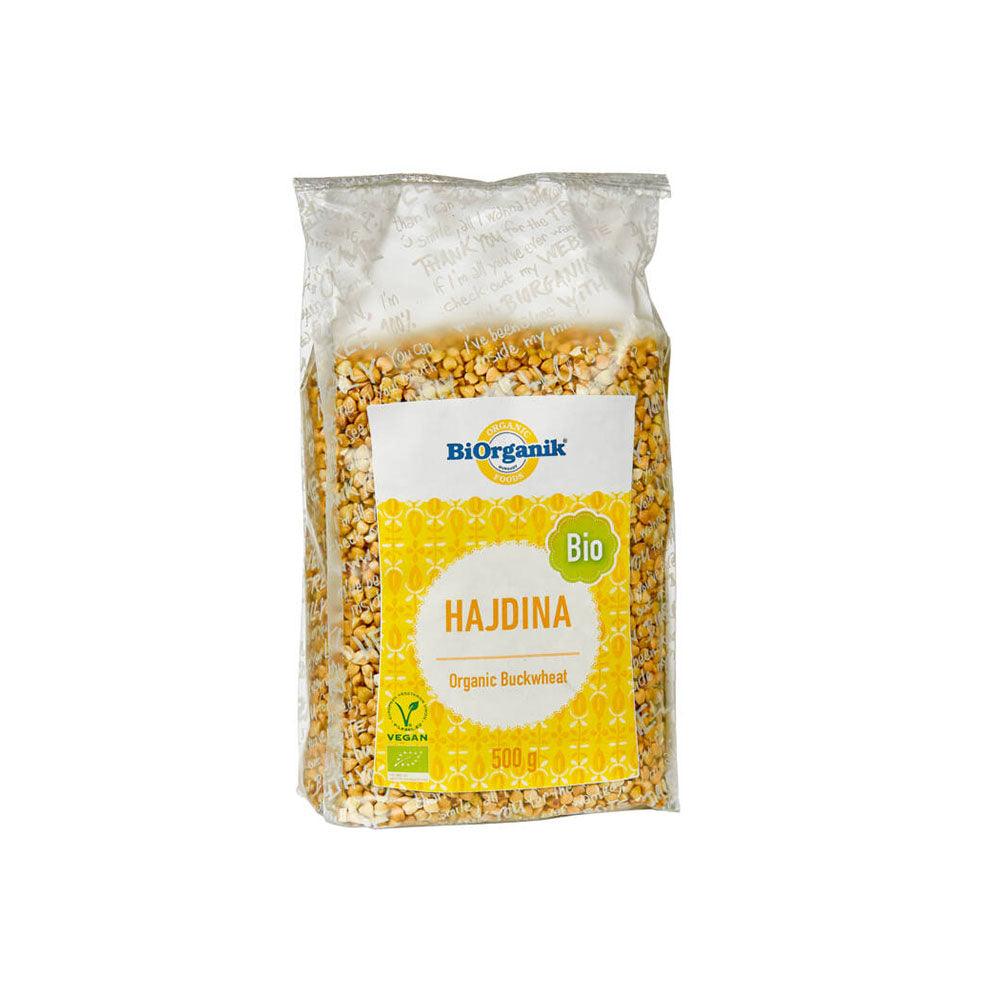
Buckwheat - 500g - organic
VIA GLS COURIER SERVICE
- You can pay the courier in cash or by credit card upon delivery, but you can also pay via Apple Pay or credit card on our website
PICK UP IN OUR STORES
- Pick up your order without shipping costs, regardless of the amount, as early as the same day in the designated Bio-Barát stores
- You can view the list of stores by clicking here
- We prepare your package almost immediately, so you can finish your shopping quickly
Inventory Information
- Blaha Lujza tér / EuropeumIn Stock
- Gazdagrét (Budawest)In Stock
- HűvösvölgyiIn Stock
- Jászai / Szent István körútIn Stock
- Keleti PályaudvarIn Stock
- Margit körútIn Stock
- MOM ParkIn Stock
- Móricz Zsigmond körtérIn Stock
- Nyugati térIn Stock
- OktogonIn Stock
- Pólus CenterIn Stock
- RózsakertIn Stock
- SavoyaIn Stock
- Váci útIn Stock
- Zenit CorsoIn Stock
- Árkád BudapestIn Stock
- Árkád GyőrIn Stock
- Árkád (Szeged)In Stock
Detailed product description
Buckwheat originally comes from central Asia. It reached us along the route of the migrations. Before the 20th century, it was mainly consumed as porridge by poorer agricultural communities, but later it disappeared completely from our diets. We have only begun to rediscover it in the past few years.
The interesting, triangular, greyish-brown seeds have a distinctive aroma that may seem strange at first, but with the right seasoning, it is easy to get used to and appreciate. It pairs excellently with walnuts and basil.
Buckwheat is not originally a cereal (it belongs to the knotweed family), but it is very similar to cereals in appearance, nutritional value and possible uses.
Significance and effects: Buckwheat is rich in fibre, which not only aids digestion and alleviates constipation, but is also beneficial in cases of blood sugar or cholesterol problems. It has a low glycaemic index, so it is also recommended for people with diabetes, insulin resistance and those following a weight-loss diet.
Buckwheat is rich in the amino acid methionine, which has a liver-protective effect. It also contains significant amounts of lysine, which is less characteristic of cereals.
It is a valuable source of vitamins and minerals. Its folate, magnesium, potassium and zinc content is noteworthy, while its B-vitamin content is similar to that of grains. Due to its antioxidant and flavonoid content, it may help prevent cardiovascular diseases. It also contains a substance called rutin, which strengthens the walls of capillaries and improves blood circulation. It may also play a role in regulating blood pressure.
Buckwheat does not contain gluten.
Preparation: Cook in approximately twice the amount of water or vegetable stock for 20 minutes until done.
It is mainly eaten as a side dish or porridge, but it can also be used to make soup dumplings, meatballs and stuffed vegetables.
Basil and curry pair well with it among spices.
Ingredients: buckwheat*
*= From Controlled Organic Farming
|
Energy value: |
1436 kJ / 343 kcal |
|
Fat: |
3,4 g |
|
- of which saturated fatty acids: |
0,7 g |
|
Carbohydrates: |
71,5 g |
|
- of which sugars: |
0 g |
|
Fibre: |
10 g |
|
Protein: |
13,3 g |
|
Salt: |
0,01 g |
Store in a dry, cool place!
Country of origin: China, Poland, Ukraine, Germany.