
The effects of collagen
A word that is connected to many skincare products and also appears in the large number of dietary supplements currently available to support bones and muscles – collagen.
You have likely already heard good things about collagen, and perhaps you are doing a little research to find out if what you've heard is true.
Or perhaps you've caught snippets of positive mentions about collagen here and there and would like to put them all together. And that's where we come in.
By the time you reach the end of this article, everything will be clear regarding collagen.
So, before you reach for the next miracle cure, we will help you understand exactly what collagen is and how it benefits your body before you decide whether or not you should start taking it.
What you need to know about collagen:
- What is collagen
- How does collagen work
- Can collagen be replaced?
- What do collagen supplements contain?
- What are the most important types of collagen?
- What is the evidence?
- Is collagen supplementation for you?
- What are the benefits of taking collagen?
- What are the benefits of collagen supplements?
- Collagen and cold weather
- Can I take Vitamin C and collagen together?
- What is the best source of collagen?
- Which foods contain collagen?
- What damages/affects collagen?
- How do lycopene and ceramides contribute to these benefits?
- Is collagen a complete protein source?
- At what age should you start taking collagen?
- What are the potential side effects of taking collagen?
- Which is the best collagen supplement?
What is collagen
When we think about our skin aging naturally, one word that often comes up is "collagen". But what exactly is it?
Collagen is a protein that occurs naturally in all animals and humans, making up approximately one-third of the body's total protein content – making it the most abundant form of protein in the body.
However, collagen is not just the key to skin that looks and feels firmer. It has many other important uses in the body.
From tendons to gums – most of the body's hard and soft tissues are primarily made up of collagen protein. It is also found in bones, skin, and ligaments, alongside blood vessels, the cornea, and teeth.
Although typically known for providing the structure of your skin, it is also vital in assisting the blood clotting process. There are four main types of collagen that support many systems in the body, but as we age, we not only produce less of it, but also a lower-quality version.
This becomes more visible on the skin, but also manifests in other ways, such as the cartilage in our bones beginning to weaken. After age 20, we produce approximately 1% less collagen in our skin each year. This means our skin becomes thinner, and from then on, we are more likely to develop wrinkles.
How does collagen work?
The exact biological mechanisms are not yet known, but scientists believe that collagen's anti-wrinkle capabilities are due to the breakdown of collagen into small amino acid and peptide chains.
When the body breaks down collagen in the digestive system, the fragments of amino acids and peptides are absorbed into the bloodstream.
This then triggers the body's natural collagen production in the skin.
It is worth noting that collagen acts as a kind of springy scaffolding for the skin – holding it together, giving it structure, and allowing it to bounce back after injuries.
Collagen also plays a role in scalp health, helping hair to grow strong and thick, and preventing nails from breaking and peeling.
In chemical terms, collagen is composed of strong strands of amino acids that are tightly linked together in a rope-like chain.
These strong chains provide the elasticity and plumpness of young, healthy skin.
During their growth, infants, children, and teenagers produce collagen at a rapid rate.
This is one reason why their skin is so smooth and wrinkle-free.
Unfortunately, as we age, our bodies slowly produce less collagen, and the effect of this is seen in the visible signs of aging.
These include wrinkles, sagging skin, thinning hair, and weak, brittle nails.
What do collagen supplements contain?
Collagen supplements are available in the form of collagen tablets, collagen injections, liquid collagen, collagen powder, collagen serum, and collagen cream.
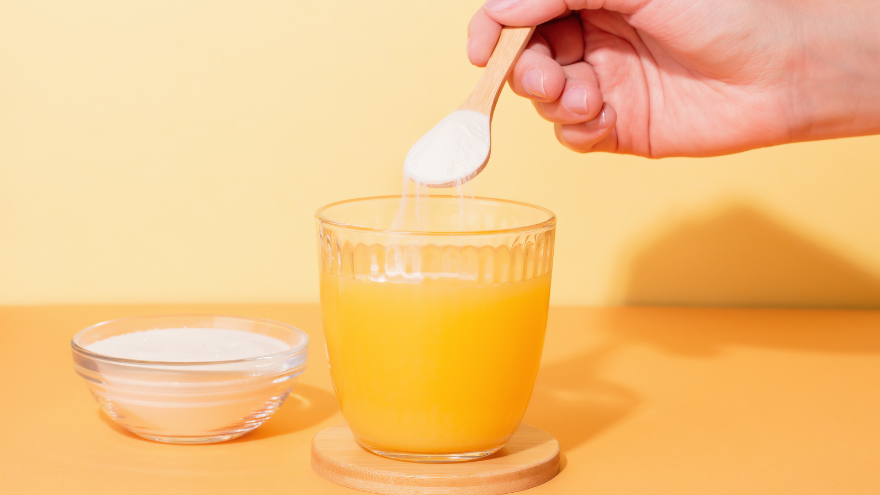
There are also collagen powders that can be added to drinks. There are three main types of collagen.
Type I is considered the best for beauty care, as it is the type known to be naturally present in hair, skin, and nails. Type II collagen is most commonly found in marine collagen, which is derived from the bones, skin, and scales of fish and other marine organisms. Type III improves muscles and organ function.
What are the most important types of collagen?
Although we just mentioned that there are three main types of collagen, there are actually many more.
In fact, there are at least 16 different types of collagen, but people tend to refer to these five as the main types:
- Type 1 - makes up 90% of the human body. This type of collagen is found in our skin and bones, blood vessel walls, connective tissue, and fibrous cartilage. It is also present in scar tissue, and of the different forms of collagen, this is the one primarily associated with skin aging – wrinkles, fine lines, etc.
- Type 2 - found in the cartilage between joints. It is well-known for helping to relieve joint pain and is abundant in bone broth.
- Type 3 - abundant in our intestines, helps create and repair the structure of our muscles, as well as our organs and blood vessels.
- Type 4 - occurs less frequently than type 1-3 collagen and helps our kidneys and organs function properly. This type of collagen is believed to aid in wound healing.
- Type 5 - found in certain layers of the skin, hair, and the tissue of the placenta in pregnant women
What is the evidence?
It can be hard to keep up with wellness trends—and so-called "nutricosmetics" can be particularly confusing as they blend science and beauty.
It's easy to be a skeptic, but the evidence behind collagen for skin and beauty is surprisingly solid.
Most research appears to examine the effects of collagen supplements on the skin.
Evidence regarding hair and nails is less robust, but this may simply be because there is less research available in these areas.
Is collagen supplementation right for you?
As the years go by, they always eventually show, which is not a bad thing. With age comes confidence and wisdom that you could only dream of at 19—this should be celebrated! However, the evidence regarding collagen supplementation is promising, and since collagen is a naturally occurring substance in our bodies, it is well-tolerated and carries very low risk. So why not try it yourself and see what collagen can do for your skin, hair, and nails?
What are the benefits of taking collagen?
Is it possible to regain the glow of youthful hair, skin, and nails as we get older? Yes! Taking collagen supplements or increasing the amount of collagen-rich foods in our diet can bring plenty of these benefits.
We have listed the 10 most important ones below:
1. Healthier skin
There is increasing medical evidence that collagen may help combat the appearance of wrinkles.
According to a 2014 study published in the journal *Clinical Interventions in Aging* on the benefits of collagen for the skin, 15% of those taking a beauty supplement made from liquid collagen containing vitamins and minerals saw fewer facial lines and wrinkles after 60 days.
The study also found that 32% experienced improvements in photoaging—aging caused by sun exposure—and 39% experienced a reduction in skin dryness. German researchers observed "statistically significant" improvements in skin elasticity, with positive effects on skin moisture and hydration levels in those who took hydrolyzed collagen supplements. Another study published in the journal *Skin Pharmacology and Physiology* found a 20% reduction in eye wrinkle depth after eight weeks of taking collagen supplements.
Newer research published in 2019 in the journal *Skin Pharmacology and Physiology*, also conducted in Germany, showed significant improvements in skin hydration, elasticity, and density after twelve weeks of oral collagen intake.
There are now many liquid collagen supplements on the market that should be taken on a daily basis, in very small amounts, to try to support the skin's collagen production and stimulate the creation of other collagen-forming proteins.
2. Less joint pain
Cartilage, the tissue responsible for protecting our joints, is made of collagen, which is why it begins to decrease as we age.
This means there is potentially a higher risk of developing joint disorders, such as osteoarthritis.
Research suggests that collagen supplements may stimulate tissues in the body to produce more cartilage.
Additionally, according to a study by *Current Medical Research and Opinion*, 73 athletes who consumed 10g of collagen daily for 24 weeks reported reduced joint pain while walking and at rest compared to the group that did not take collagen.
3. More muscle mass
Collagen is thought to help increase muscle mass and strength; however, these supplements cannot replace dietary protein, which is designed to balance blood sugar levels and fuel metabolic functions.
About 1-10% of the muscle tissue in the human body consists of collagen, which helps maintain muscle strength and proper function.
And according to research published in the *British Journal of Nutrition*, collagen supplements may potentially contribute to muscle growth and facilitate the creation of muscle proteins such as creatine.
4. A healthier heart
It is thought that collagen supplements may be able to reduce the risk of heart-related conditions.
A 2017 study published in the *Journal of Atherosclerosis and Thrombosis* examined this and found that the reason for this is that collagen contributes to and maintains the structure of our arteries, which are responsible for pumping blood from our heart throughout our body.
If we don't have enough collagen, it could potentially mean that our arteries become weak and brittle over time.
5. Strong bones
Our bones are made mainly of collagen, which provides their structure and helps maintain their strength.
The older we get, the less collagen we have in our bodies, and we also have less bone mass.
*Seminars in Arthritis & Rheumatism* compiled research that showed taking collagen supplements may help maintain healthy bone mass.
In addition, collagen has proven beneficial for joint pain and weakness, and it is believed that collagen supplements may also play a role in managing arthritis symptoms.
It has also been found to support healthy bone density in older women.
6. Better digestion
Some research suggests that collagen contains an amino acid called glycine, which may potentially promote normal and healthy digestion.
7. Stronger and healthier hair and nails
The benefits of collagen for hair are less well-known, but just as impressive.
Several scientists have studied how collagen may help nails grow strong and less brittle, as well as promote hair growth.
A 2014 American study showed that oral collagen intake can have significant benefits for hair and nails.
An oral supplement containing collagen (along with hyaluronic acid, peptides, and lipids) was given daily to 54 women between the ages of 26 and 68.
The results showed statistically significant improvements in nail cracking and brittleness—nearly 80%—as well as improvements in hair dullness, hair dryness, and nail softness after eight weeks.
A longer 60-week study showed that after just nine months, 100% of participants experienced improvements in hair dryness, hair dullness, and nail peeling.
The authors concluded that "nutritional supplementation... with peptides and lipids—building blocks for healthy skin, hair, and nails—as well as hyaluronic acid and collagen... provides fast, measurably significant, and lasting results."
8. A healthier gut
Have you heard that collagen has beneficial effects on your gut health?
Back in 2017, a study published in the journal *Food & Function* found that collagen peptides (a more bioavailable form of collagen) inhibit the breakdown of the gut lining. Furthermore, *Clinical and Experimental Gastroenterology* conducted research on the subject in 2012.
It found that the natural collagen content of gelatin tannate supplements promotes anti-inflammatory reactions in the gut.
9. Weight loss
Another claim that has limited research to support it is the idea that collagen may help with weight loss by potentially speeding up people's metabolism.
Moreover, a specific type of collagen derived from stingray fish was found to reduce body fat in humans, according to a 2019 study published in the journal *Marine Drugs*.
10. Reduces recovery time
Collagen does indeed strengthen the connective tissue that supports active muscles, which means recovery time from injuries can be reduced.
An article published in the journal Amino Acids in September 2021 supports this idea, as it concluded that a daily dose of 5-15 g of collagen improved joint pain and functionality, and that muscle recovery showed modest but significant improvement with this supplementation.
What are the benefits of collagen supplements?
Taking collagen supplements, which are either hydrolyzed collagen or gelatin. These can come in liquid, powder, or tablet form.
Hydrolyzed collagen has been broken down into smaller peptides instead of the usual large protein, making it easier for the body to absorb.
Collagen supplement powders are versatile as they can be easily mixed into various smoothies and drinks.
Collagen and cold weather
Adding collagen to your beauty regimen can be especially beneficial in winter, when cold weather and central heating take a toll on our hair, skin, and nails. Most people also reduce their consumption of fresh fruits and vegetables in winter, which means we may miss out on essential nutrients like vitamin C - which helps the body produce collagen - making supplementation even more useful.
Can I take vitamin C and collagen together?
Of course! And as we just mentioned, vitamin C itself helps the body produce more collagen, so doubling up with supplementation is the best solution.
What is the best source of collagen?
There is no single source of collagen, because it is present in food form (from both plant and animal sources) as well as in the form of collagen supplements.
In addition, different sources of collagen provide different types of collagen, and therefore different health benefits.
Since there is no single source of collagen, it is best to try to incorporate it into your diet/life in the way that works best for you.
For example, if you prefer animal-based sources over plant-based sources, then stick to foods 1-3 below, and if you prefer fish/marine and fruit sources, then stick to those instead.
Or if you don't mind, it is perfectly fine to enjoy a combination of the two!
Before we move on to discuss some of the main food sources of collagen, we would also like to mention certain nutrients that can also help with collagen production.
These are zinc, vitamin C, and copper, so keep these in mind when planning your next collagen-rich meal!
What foods contain collagen?
There are many ways to naturally increase the amount of collagen-rich foods in your diet.
The main dietary sources of collagen are:
1. Chicken bone broth - which contains not just bone, but also cartilage. Because of this, it is high in the collagen found in our skin and bones, as well as glucosamine, chondroitin, and hyaluronic acid.
2. Bovine collagen - contains two different types of collagen: skin and bone collagen, as well as cartilage collagen, and has particularly beneficial effects on our skin and bones.
3. Egg white - also contains two different types of collagen, but not the same ones as bovine collagen. The eggshell membrane contains the same type of collagen found in the placenta and in cartilage and disc tissue.
4. Marine collagen - most commonly found in freshly caught fish. It consists primarily of the collagen in our skin and bones. It contains some of the same collagen that is found in our gut lining.
5. Other foods that promote collagen production include citrus fruits (e.g., oranges, grapefruit, lemons, limes), berries (e.g., raspberries, blueberries, blackberries), tropical fruits (e.g., mango, kiwi, pineapple), garlic, leafy greens, cashews, tomatoes, and bell peppers.
What damages/affects collagen?
Even though there are several types of collagen, our collagen levels do not stay the same forever.
As we age, our bodies naturally produce:
- Less of it
- Lower quality collagen
The biggest tell-tale sign of this is when our skin looks less firm and begins to lose its elasticity.
Our age can massively affect our collagen levels, and so can these things:
1. Eating many sugary foods and refined carbohydrates.
This is because: Sugar disrupts collagen's ability to do what it naturally does and repair itself. 39
2. Getting too much sun exposure
This is because the sun's UV rays can reduce collagen production, so excessive tanning is a big no-no. 40
3. Smoking
This is because: Like UV rays, this also reduces collagen production. This can also lead to wrinkles.
How do lycopene and ceramide contribute to these benefits?
Lycopene is a powerful antioxidant - and it just so happens to be what gives tomatoes their red color.
Ceramides are a type of fatty acid known as lipids, which are fantastic at helping lock in moisture and protect against environmental damage.
So, if you combine these things with the effects of collagen, you can achieve some truly exciting results for your skin.
Is collagen a complete protein source?
Collagen is a special type of protein because it does not contain all nine essential amino acids required for a complete protein.
However, it does contain some essential amino acids that are missing from many modern diets and are effective for recovery and repair.
This means that taking a collagen supplement can be effective in acting as the glue that holds most of our body together, keeping us strong and flexible, but it should not be consumed as a primary protein source.
At what age should you start taking collagen?
Since collagen production decreases by 1-1.5% per year from early adulthood, it is worth considering taking collagen supplements from your mid-twenties.
What side effects can taking collagen have?
Fortunately, using collagen supplements is generally safe and is unlikely to cause significant side effects.
However, some reported minor side effects include:
- a heavy feeling in the stomach
- mild diarrhea
- rashes
Which is the best collagen supplement?
When taking a dietary supplement, always make sure it provides exactly what your body needs.
Collagen supplements are not a form of complete protein, so you must ensure that you are taking a product that meets your body's requirements.
Always introduce a new supplement into your diet with caution.
If you are unsure or experience any side effects, consult your doctor.
Vitamins for beautiful hair, skin, and nails: Holland & Barrett vitamins
Sources:
https://bionumbers.hms.harvard.edu/bionumber.aspx?&id=109730
https://www.rejuvaustralia.com.au/blog/collagen-production-decrease/
https://onlinelibrary.wiley.com/doi/full/10.1111/jocd.12174
https://www.ncbi.nlm.nih.gov/pmc/articles/PMC6835901/
https://www.ncbi.nlm.nih.gov/pmc/articles/PMC2846778/
https://pubmed.ncbi.nlm.nih.gov/16723701/
https://www.ncbi.nlm.nih.gov/pmc/articles/PMC6073484/
https://www.sciencedirect.com/topics/neuroscience/collagen-type-1
https://www.humann.com/nutrition/different-types-of-collagen/#section2
https://www.udl.co.uk/insights/nutricosmetics-you-are-what-you-eat
https://www.consumerlab.com/reviews/Collagen_Supplements_Review_Peptides_Hydrolysate/collagen/
https://www.ncbi.nlm.nih.gov/pmc/articles/PMC4206255/
https://pubmed.ncbi.nlm.nih.gov/23949208/
https://pubmed.ncbi.nlm.nih.gov/24401291/
https://www.ncbi.nlm.nih.gov/pmc/articles/PMC6835901/
https://pubmed.ncbi.nlm.nih.gov/17076983/
https://pubmed.ncbi.nlm.nih.gov/18416885/
https://www.ncbi.nlm.nih.gov/pmc/articles/PMC3177172/
https://www.ncbi.nlm.nih.gov/pmc/articles/PMC4594048/
https://www.ncbi.nlm.nih.gov/pmc/articles/PMC5429168/
https://pubmed.ncbi.nlm.nih.gov/11071580/
https://www.genuinehealth.com/en-us/genuine-hub/can-collagen-replace-my-protein-supplement/
https://www.goodhousekeeping.com/health/a20707028/collagen-supplement-explainer/
https://www.longdom.org/open-access/a-nutritional-supplement-formulated-with-peptides-lipids-collagen-and-hyaluronic-acid-optimizes-key-aspects-of-physical-appearance-in-nails-hair-and-skin-2155-9600.S5-002.pdf
https://www.longdom.org/open-access/a-nutritional-supplement-formulated-with-peptides-lipids-collagen-and-hyaluronic-acid-optimizes-key-aspects-of-physical-appearance-in-nails-hair-and-skin-2155-9600.S5-002.pdf
https://pubmed.ncbi.nlm.nih.gov/28174772/
https://www.ncbi.nlm.nih.gov/pmc/articles/PMC3358810/
https://www.ncbi.nlm.nih.gov/pmc/articles/PMC6471368/
https://link.springer.com/article/10.1007/s00726-021-03072-x
https://www.ncbi.nlm.nih.gov/pmc/articles/PMC6891674/
https://www.ncbi.nlm.nih.gov/pmc/articles/PMC6204628/
https://www.ncbi.nlm.nih.gov/pmc/articles/PMC6204628/
https://pubmed.ncbi.nlm.nih.gov/7466582/
https://www.ncbi.nlm.nih.gov/pmc/articles/PMC6204628/
https://www.ncbi.nlm.nih.gov/pmc/articles/PMC4556990/
https://goop.com/wellness/health/best-sources-of-collagen/
https://www.ncbi.nlm.nih.gov/pmc/articles/PMC5579659/
https://www.ncbi.nlm.nih.gov/pubmed/16465309/
https://www.ncbi.nlm.nih.gov/pubmed/20620757
https://www.ncbi.nlm.nih.gov/pmc/articles/PMC4665475/
https://pubmed.ncbi.nlm.nih.gov/11966688/
https://www.ncbi.nlm.nih.gov/pubmed/12553851
https://parjournal.net/article/view/3863
https://www.versusarthritis.org/about-arthritis/complementary-and-alternative-treatments/types-of-complementary-treatments/collagen/



Leave a comment
All comments are moderated before being published.
This site is protected by hCaptcha and the hCaptcha Privacy Policy and Terms of Service apply.