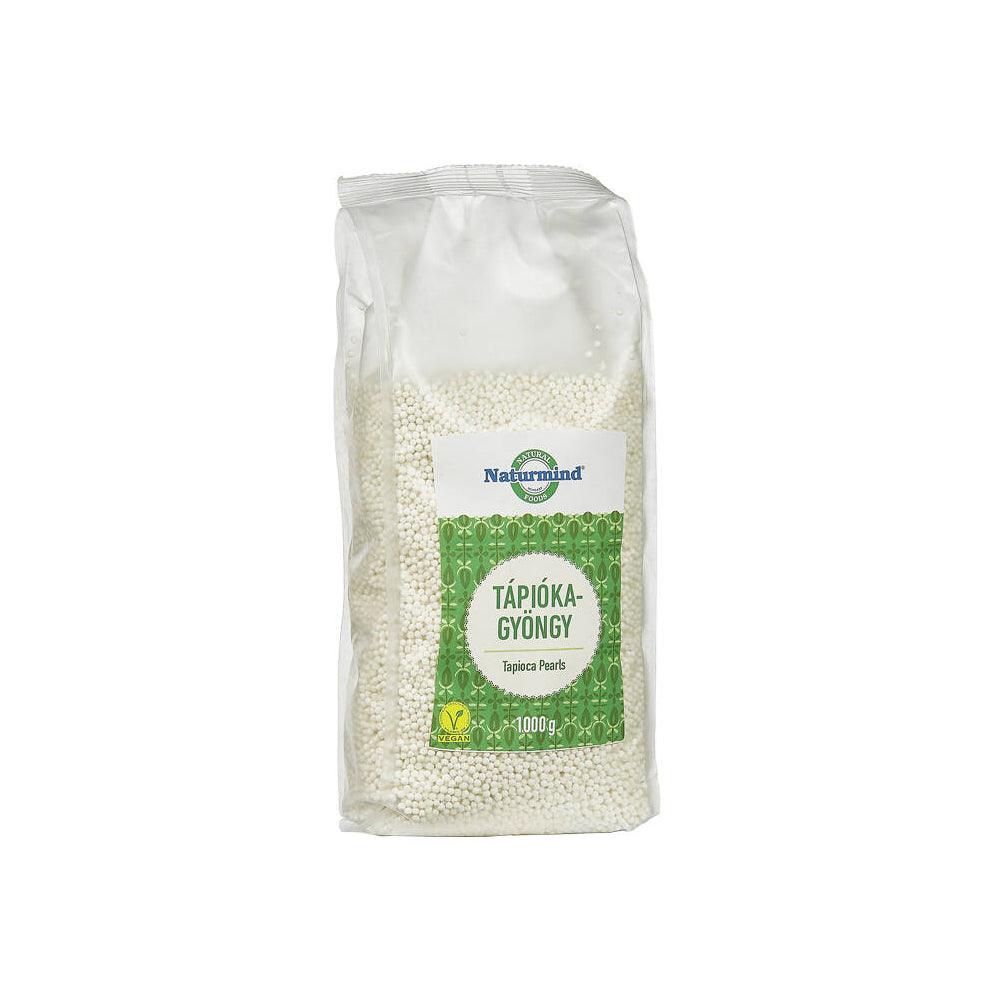
Tapioca pearls - 1000g
VIA GLS COURIER SERVICE
- You can pay the courier in cash or by credit card upon delivery, but you can also pay via Apple Pay or credit card on our website
PICK UP IN OUR STORES
- Pick up your order without shipping costs, regardless of the amount, as early as the same day in the designated Bio-Barát stores
- You can view the list of stores by clicking here
- We prepare your package almost immediately, so you can finish your shopping quickly
Inventory Information
- Blaha Lujza tér / EuropeumIn Stock
- Gazdagrét (Budawest)In Stock
- HűvösvölgyiIn Stock
- Jászai / Szent István körútIn Stock
- Keleti PályaudvarIn Stock
- Margit körútIn Stock
- MOM ParkIn Stock
- Móricz Zsigmond körtérIn Stock
- Nyugati térIn Stock
- OktogonIn Stock
- Pólus CenterIn Stock
- RózsakertIn Stock
- SavoyaIn Stock
- Váci útIn Stock
- Zenit CorsoIn Stock
- Árkád BudapestIn Stock
- Árkád GyőrIn Stock
- Árkád (Szeged)In Stock
Detailed product description
Cassava, or tapioca, is a plant originating in Central and South America, but it is now also cultivated across large areas of Asia and Africa. The plant's root is used primarily; after rice and corn, it is the world's most important source of carbohydrates.
The tapioca root is not suitable for human consumption when raw, but after processing, the products available in stores do not cause problems. It is used mainly in pearl and powder form, but it is also used to make animal feed and, due to its high starch content, can serve as a raw material for the textile and paper industries. Interestingly, it is also used to make glue and alcohol, and it plays an important role in biofuel production.
In some countries, the plant's leaves are also consumed; they contain a much wider range of nutrients than the root.
Tapioca pearls are made from the tapioca root without adding additives. They are a popular ingredient in Southeast Asia, used mainly in desserts and specialties such as bubble tea.
Significance and effects:
Tapioca mainly contains carbohydrates and starch, with very little fiber, so it has a high glycemic index and quickly raises blood sugar levels. Consequently, it is suitable for rapid energy intake (for athletes), but it is not recommended for anyone wishing to lose weight. Diabetics should avoid it for the same reason.
It contains small amounts of protein and negligible fat. Its vitamin and mineral content is not particularly significant. It is low in sodium.
Tapioca is naturally gluten-free, so people with gluten intolerance can consume it safely. It also contains no lactose, making it suitable for lactose-free and dairy-free diets.
Uses:
Tapioca pearls are generally associated with tapioca pudding, which can be enjoyed on its own, used as a cream filling on pastries and cakes, or even as a decorative element for a more special dish. Thanks to its water-absorbing properties, tapioca can also be used as a thickener or even as a soup garnish (it looks great in fruit soup).
To prepare tapioca pudding, first soak the tapioca pearls in water or plant-based milk for 10–15 minutes, then flavor as desired and cook over low heat, stirring continuously, until thickened (about 10–15 minutes). Spoon into small bowls and leave to cool.
Because tapioca has a neutral flavor, it can be used to make both sweet and savory pudding. It is most delicious with fresh, juicy fruit.
The next time we want to surprise our guests with a truly special yet very simple drink, let’s make them bubble tea with tapioca pearls! All we need to do is soak the tapioca pearls in black tea or strongly colored fruit tea, then let the pearls swell and absorb the color of the tea. After that, rinse the swollen pearls with cold water, drain them, and shake them thoroughly in a shaker or, if unavailable, in a jar. Serve in a decorative glass with a thick bamboo straw.
Ingredients: tapioca starch
Nutritional content (per 100 g):
| Energy value: | 1516 kJ / 356 kcal |
| Fat: | 0,1 g |
| - of which saturated fatty acids: | 0,03 g |
| Carbohydrates: | 88,4 g |
| - of which sugars: | 0 g |
| Protein: | 0,56 g |
| Salt: | 0,03 g |
Store in a dry, cool place!
Country of origin: Thailand.