
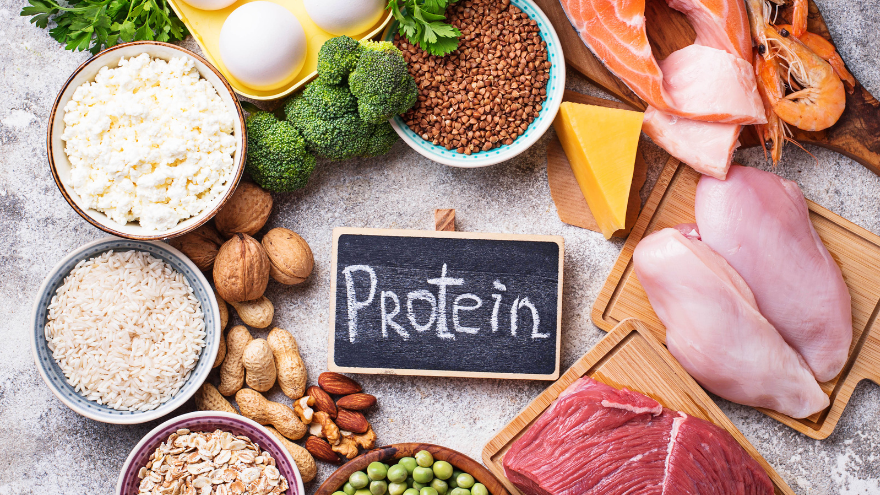
The benefits and impact of lean protein
There is protein, and then there is lean protein. Do you know the difference between the two?
Isabel Tarrant, one of our nutrition experts, walks you through everything you need to know about lean proteins and answers some of the most frequently asked questions about this important source of nutrition.
What is lean protein?
Lean protein is a source of protein that is low in saturated fat. Because of this, it is also low in calories, which is why it is called "lean".
Lean protein is widely recognized as being healthier for our bodies than non-lean protein, precisely because it contains much less saturated fat, which can affect heart health.
Consistent consumption of large amounts of saturated fatty acids has been linked to an increase in levels of "bad" cholesterol, also known as low-density lipoprotein (LDL).
High LDL levels can result in the accumulation of fatty deposits in our blood vessels.
Over time, these fatty deposits grow and cause blockages in the vessels.
As a result, it becomes increasingly difficult for blood to flow efficiently through our arteries, leading to a condition known as atherosclerosis.
People suffering from this condition have a higher risk of heart problems, such as heart disease and blood clots. The risk of heart attack is also higher.
Why is lean protein good for you?
For heart health, it is essential to be mindful of how much saturated fat we consume daily, especially from meat.
Healthier foods, such as lean protein, are an ideal choice because they allow you to meet your protein intake requirements while helping to maintain healthy cholesterol levels and look after your heart.
Summary
- Lean protein is protein that is low in saturated ("bad") fat and calories.
- Consuming unsaturated fats is essential for heart health.
- Lean protein sources help meet your protein intake needs without raising your cholesterol levels.
What is the difference between lean and non-lean protein?
As mentioned above, lean protein refers to protein that is low in fat, especially saturated fat. In contrast, non-lean protein is known for being high in fat.
For example, a 100g serving of sirloin steak contains approximately 27g of protein, 11.4g of fat, and 213 calories.
Now, by comparison, the same amount of skinless chicken contains the same amount of protein (approx. 31g), but only 1.6g of fat. Furthermore, in terms of calorie content, it contains only 137 calories.
Since fat is a calorie-dense macronutrient, lean protein naturally has a lower calorie count than regular protein due to its lower fat content.
So, although we have already mentioned that lean protein is good for heart health, provides your protein quota, and is useful for maintaining healthy cholesterol levels, there is another health benefit associated with it as well.
It can also be useful to incorporate into your diet if you want to lose weight and are watching your calorie intake.
Does an egg count as lean protein?
In general, eggs are recognized as a convenient, versatile, and healthy source of protein, but they usually contain quite a bit of saturated fat.
Egg white is the leanest part of the egg, and per egg contains approximately 4g of protein, 17 calories, and 0g of saturated fat.
However, regarding the egg yolk, it does contain saturated fat, about 1.6g per egg.
This, however, does not mean that you should avoid eating eggs. If you want to reduce your intake of saturated fat, simply stick to eating only the egg whites, which are a good source of lean protein. You can still consume egg yolks, but it is better to do so in moderation.
Summary
- Meats made from non-lean protein are high in fat
- Lean protein can help reduce your intake of saturated fat and calories.
- Egg white is the leanest part of the egg and a good source of protein
What are the 5 best meats?
As you probably know by now, not all meat is the same. Consequently, not all meat is lean, although certain types of meat are leaner than others.
The 5 best types of meat are as follows:
1. Skinless chicken breast
2. Skinless turkey breast
3. Lean cuts of beef
4. Venison
5. Lean pork fillet
What are the best lean protein foods?
Aside from meat, there are plenty of different sources of lean protein.
To help you identify what these are, we have listed the main food sources of lean protein below.
The 6 best sources of lean protein:
Among the plant-based sources of lean protein, beans and legumes are considered the best choice.
The reason for this is that beans and legumes, such as kidney beans, lentils, and chickpeas, are naturally very low in saturated fat and rich in plant-based protein.
For example, a 100g serving of green lentils contains 8g of protein and less than 0.2g of saturated fat.
In addition, chickpeas, lentils, and kidney beans are packed with vitamins and minerals, such as zinc, iron, B vitamins, and fiber.
Benefits of consuming beans and legumes - at a glance
- Plant-based, making them suitable for vegans and vegetarians.
- Low in saturated fat
- Packed with plant-based protein
- Certain beans and legumes, such as chickpeas, lentils, and kidney beans, are full of vitamins and minerals, including zinc, iron, B vitamins, and fiber.
2. Low-fat plain Greek yogurt
Plain Greek yogurt is much richer in protein than regular yogurt.
Every 100g serving has approximately 7.5g of protein, while regular yogurt has 3g.
Furthermore, low-fat Greek yogurt contains minimal saturated fat and is recognized as a good source of lean protein.
In addition to all this, live Greek yogurt contains friendly bacteria that help support a healthy gut microbiome.
Benefits of consuming plain Greek yogurt - at a glance:
- Higher protein content than regular yogurt
- Contains minimal saturated fatty acids
- Packed with lean protein
- Contains friendly bacteria for good gut function
3. Skinless turkey breast
Turkey is one of the best sources of lean protein, but this depends on the cut.
The dark meat found around the legs and thighs contains much more fat than the white meat of the turkey breast.
Additionally, turkey skin is extremely high in fat, so if you are looking for a source of lean protein, definitely choose skinless turkey. This type of turkey contains 33g of protein and just 0.5g of saturated fat per 100g.
Furthermore, turkey is rich in B vitamins, especially vitamin B12, B3, and B6, which contribute to energy levels, brain health, and the production of red blood cells.
Turkey is also a rich source of zinc, which supports immune system function, and selenium, which is essential for thyroid health.
Benefits of consuming skinless turkey breast - at a glance:
- One of the best sources of lean protein
- White, skinless turkey meat is the leanest
- Rich in B vitamins - B12, B3, and B6.
- Packed with zinc and selenium
4. Skinless chicken breast
Similar to turkey, skinless chicken breast is also recognized as a great source of lean protein.
It has a high protein content, containing approximately 31g of protein per 100g, but only 0.5g of saturated fat.
Chicken breast is also an ideal choice for those who are watching calories and want to lose weight, as it contains 137 calories per 100g.
In addition to being a source of lean protein, chicken breast is also rich in vitamin B12, which helps support energy levels and reduce fatigue.
Furthermore, chicken contains tryptophan, zinc, choline, and selenium to support heart, brain, and immune system health.
Benefits of eating skinless chicken breast - at a glance:
- Excellent source of lean protein
- Low calorie content
- Rich in vitamin B12
- Contains tryptophan, zinc, choline, and selenium.
5. White fish
White fish, such as cod, haddock, and halibut, are all fantastic sources of protein that are also low in fat.
White fish are also low in calories, making them ideal if you are dieting and want to lose weight.
For example, 100g of cod fillet contains 21.5g of protein, 0.5g of saturated fat, and only 89 calories.
Be sure to choose fresh fish fillets instead of battered or breaded fillets to avoid unnecessary calorie and fat intake.
However, when comparing white fish to oily fish, such as salmon, white fish contains much less Omega-3 - only about 20% of the Omega-3 content found in salmon.
Therefore, it is recommended to consume a mix of lean white and oily fish to ensure you get all the necessary Omega-3s.
Benefits of eating white fish - at a glance:
- Great source of protein
- Low fat content
- Low calorie content
6. Tofu
Tofu is another lean protein source that is perfect for those following a plant-based diet.
It is made from soybeans, which are naturally rich in protein and low in fat. 100g of tofu contains about 13g of protein and only 1g of saturated fat.
In addition to these benefits, tofu contains the full range of 9 essential amino acids.
Amino acids are the building blocks of protein and are vital for the proper functioning of every organ in our body.
Our bodies cannot produce the essential amino acids, which means it is very important to obtain them from our diet. Therefore, tofu is a great option for getting a high-quality protein source containing the full range of essential amino acids.
Tofu is also rich in iron, which is ideal for vegans who do not get their iron intake from animal sources such as meat. Iron is vital for supporting energy levels and reducing fatigue.
Tofu also contains calcium, which is important for bone and muscle health.
Benefits of eating tofu - at a glance:
- Plant-based, making it suitable for vegans and vegetarians
- Contains the full range of 9 essential amino acids.
- Rich in iron
- Contains calcium
Summary
- Skinless chicken and turkey breast, as well as lean beef, are among the best lean protein-rich foods.
- Plant-based protein sources include beans and legumes, as well as tofu.
- Other lean protein sources include white fish and plain Greek yogurt.
Find out what other healthy foods you can eat without worry!
When should you take lean protein supplements?
Most people can get the protein they need through a balanced and nutritious diet.
However, in some cases, not everyone consumes the required protein every single day, especially if they follow a restricted diet, such as a vegan diet, have allergies, or are lactose intolerant. Hand-picked content: 21 best vegan protein sources. It follows that while there are many different sources of protein (and lean protein), not all of them are suitable for everyone.
This is where protein supplements come in, as they are an easy and convenient way to increase your protein levels when needed.
According to daily recommended guidelines, we should consume about 1g of protein per kilogram of body weight.
So, if you weigh 60kg, you should consume about 60g of protein per day.
And if you are following a bodybuilding program, you should increase your protein intake to about 1.5g per kilogram of your total body weight.
If you are wondering how much protein you should consume daily and are struggling to reach the required amount, it might be worth supplementing with protein powder to ensure you meet your needs.
Similarly, if you have started a new weightlifting or fitness program and are focusing on building muscle, you should also consider incorporating protein powder into your diet to help achieve your goals.
Protein powders are extremely versatile and can be used in many different ways to suit your lifestyle. Mixed with milk, you can make a delicious shake that you can take with you on the go.
Alternatively, you can mix protein powders into a smoothie with your favorite fruits and vegetables.
Or you can add it to your morning porridge or other cereals, or mix it into Greek yogurt garnished with fresh berries.
Lean protein powder vs. protein powder - what's the difference?
Lean protein powders differ from regular protein powders in that they have a lower fat content, especially saturated fats, and a higher protein content than regular protein powders.
Like protein-rich food sources, lean protein powders are also generally lower in calories compared to regular protein powders. This means they are ideal if you want to lose fat, build muscle, and maintain a lean, toned physique.
One of the main types of lean protein powder is whey isolate.
Whey isolate differs from traditional whey concentrate because it has been specially processed to contain less fat and lactose. This, in turn, means it has a higher, "purer" protein content.
Whey isolate contains more than 90% protein and about 0.1g of fat, compared to traditional whey, which contains about 70% protein and 3g of fat per serving.
And because the lactose is removed from whey protein isolate, it is also an ideal choice for those who are lactose intolerant (but not allergic to milk).
If you are looking for the best whey protein isolate supplement, look for products that come from grass-fed cows, as the milk produced by grass-fed cows generally has a lower saturated fat content than milk produced by cows fed chemically treated grain.
Summary
- You should take protein supplements if you are not getting enough protein from your diet, if you cannot consume certain food sources due to allergies, or if you follow a special diet (e.g., vegan).
- The recommended daily protein guideline is about 1g of protein per kilogram of body weight.
- Lean protein powders have a lower fat content, especially saturated fats, and a higher protein content than traditional protein powders.
Vitamins for a healthy lifestyle: Holland & Barrett vitamins


Leave a comment
All comments are moderated before being published.
This site is protected by hCaptcha and the hCaptcha Privacy Policy and Terms of Service apply.