
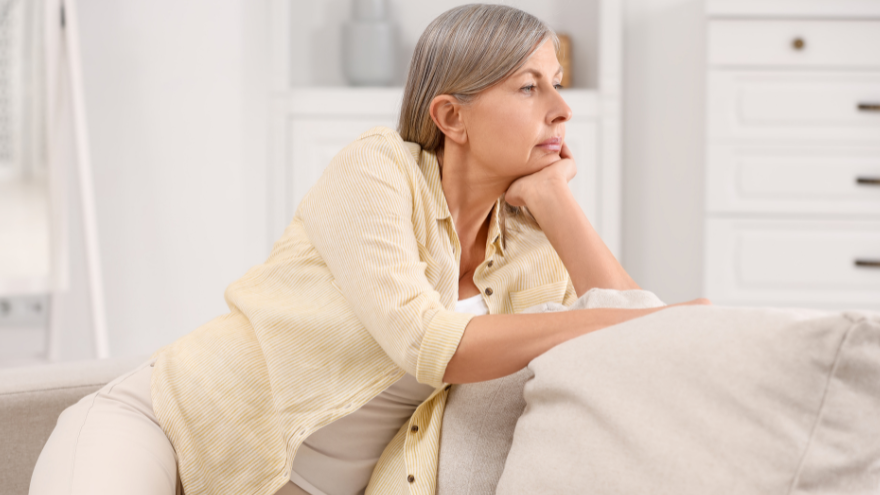
What exactly is menopause?
Not sure what to expect when it comes to menopause? Here you can find out what it's all about.
For a long time, menopause was considered a dreaded period associated with aging and loss of attractiveness. That has all changed now. This attitude is slowly starting to catch on with others, but many women are still unsure about what to expect, what the symptoms of menopause are. In this guide, you will find everything you need to know about menopause—and beyond.
What does menopause mean?
Technically, menopause simply means the cessation of menstruation, when no menstrual bleeding has occurred for at least a year. However, the word "menopause" is often used to describe what is—strictly speaking—perimenopause. This is the period before menopause, when the levels of the main female hormones (estrogen and progesterone) begin to rise and fall erratically. Perimenopause lasts an average of about four years, although for some women it can take up to 12 years. You will likely start noticing the signs of perimenopause in your forties or even your thirties—only 10% of women report that their menstruation stops suddenly without any noticeable changes to their cycle beforehand. Menopause generally occurs between the ages of 45 and 55.
Why does menopause occur?
Because the supply of follicles in the ovaries—needed to produce eggs—begins to run out. This has several effects: the ovaries are less able to respond to reproductive hormones, such as follicle-stimulating hormone, which means they produce less estrogen and progesterone—the hormones that regulate menstruation and are necessary for fertility—causing classic menopause symptoms⁵. Okay, so much for the physical causes that trigger menopause, but why do women actually go through it? One theory is that it is an evolutionary retreat that gives women the opportunity to take care of their grandchildren, pass on their knowledge, and protect the next generation of their genes.
What are the most common symptoms of menopause?
Not all women experience significant symptoms, and you might barely notice the transition. But here are the most common symptoms of menopause and how you can manage them:
Menstrual changes
A persistent change in the length of your cycle, exceeding seven or more days—making it shorter or longer—can indicate that you are in early perimenopause. Gaps of 60 days or more between periods usually occur in the later stages of perimenopause. Menstrual changes are caused by ovulation becoming unpredictable as the egg supply decreases.
What you can do: This is a normal part of the menopause transition, but consult your doctor if the bleeding is bothersome—for example, if it is particularly heavy.
Hot flashes
Hot flashes and night sweats are collectively known as "vasomotor symptoms" and affect 60–85% of women, with varying severity and frequency. They generally last about two years, but for 10% of women, hot flashes can last up to 15 years. Experts still do not know exactly what causes them, but they believe hormonal fluctuations affect how the brain regulates body temperature.
What you can do?
- Ask your doctor about hormone replacement therapy (HRT)—HRT replaces missing hormones and is the most effective way to eliminate vasomotor symptoms because it treats the root cause. Taking HRT can also reduce the risk of diseases such as heart disease and osteoporosis, which increase after menopause.
- Some women in menopause prefer to use alternative remedies to manage their symptoms, such as agnus castus, red clover, or soy isoflavones.
- Simple lifestyle measures—such as wearing natural fibers and reducing stress—can also improve hot flashes.
- Reducing (or eliminating) the consumption of alcohol and spicy foods—these can often aggravate hot flashes.
- Consider taking a CBT (cognitive behavioral therapy) course—this has been proven to reduce the frequency and duration of hot flashes.
Mood problems
Anxiety and depression are more likely to affect women during perimenopause; if you have had depression before, you are likely to experience it now as well. Changes in hormone levels can affect neurotransmitters that regulate mood, such as serotonin. Of course, your mood can also be influenced by other factors during this time, such as the loss of fertility and negative social stereotypes related to menopause, as well as worries related to children, work, and elderly parents.
What you can do: You can alleviate depression and anxiety with self-help measures, including yoga, meditation, and regular exercise. Also, talk to your doctor about a CBT course. HRT can be helpful, but antidepressants are not recommended as there is no evidence that they affect low mood associated with menopause. Some women find that herbal remedies, such as St. John's wort or valerian, may help with low mood or anxiety during menopause.
Sexual problems
Decreasing estrogen levels can thin and dry out the vaginal walls, making you prone to infections and making sex uncomfortable. You may also experience irritation and soreness, even if you are not sexually active. Furthermore, your libido may decrease. Stress and relationship problems can also contribute to a decrease in sexual desire and loss of lubrication.
What you can do: Vaginal dryness is very easily treated with local estrogen, which can be used in the form of a cream, pessary, or vaginal ring. It can be used alone or in conjunction with HRT. Alternatively, you can try over-the-counter vaginal moisturizers and lubricants.
And what about life after menopause?
After menopause, due to the lack of estrogen, you are more prone to developing osteoporosis and heart disease. You may also experience weight gain and your skin may become drier. You can support bone health by increasing your calcium and vitamin D intake—the government recommends a daily intake of 10 mcg for all postmenopausal women—while omega-3 may help reduce the risk of cardiovascular disease and fight dry skin.
This might seem like a lot, but every woman experiences menopause differently. Some get through it easily, while others are brought to their knees by the symptoms—either way, it is a sign that an exciting new chapter has begun in their life. And don't forget that you are in good company; finally, we all have something in common with a supermodel!
The advice provided is for informational purposes only and cannot replace medical care. Please consult your doctor before trying any remedy.
Vitamins to accompany a healthy lifestyle: Holland & Barrett vitamins
Sources:
Mayo Clinic. Menopause. Available from: https://www.mayoclinic.org/diseases-conditions/menopause/symptoms-causes/syc-20353397
Mayo Clinic. Perimenopause. Available from: https://www.mayoclinic.org/diseases-conditions/perimenopause/symptoms-causes/syc-20354666
Cheung AM, et al. Perimenopausal and postmenopausal health. Available from: https://www.ncbi.nlm.nih.gov/pmc/articles/PMC2096694/Menopause. Available from: https://www.nhs.uk/conditions/menopause
Kevin Arbuckle. The Conversation. Why do women go through menopause? Science offers new solution to old puzzle. Available from: https://theconversation.com/why-do-women-go-through-menopause-science-offers-new-solution-to-old-puzzle-54856
Symptoms: menopause. Available from: https://www.nhs.uk/conditions/menopause/symptoms/
Menopause Matters. Menopause symptoms. Available from: https://www.menopausematters.co.uk/symptoms.php
Treatment: menopause. Available at: https://www.nhs.uk/conditions/menopause/treatment/

Leave a comment
All comments are moderated before being published.
This site is protected by hCaptcha and the hCaptcha Privacy Policy and Terms of Service apply.